My Experience With Cerebral Palsy Pain and Mental Health
Cerebral palsy can affect mental health in ways people do not always see. Chronic pain, sleep issues, recovery, stress, and feeling misunderstood can all play a role.
Living with cerebral palsy is not only about my speech differences, tremors, or fatigue. The part that people don’t fully understand or always see is the chronic pain that can come with it.
Pain is not something that only shows up once in a while. It can become part of everyday life, even in the smallest functions.
Mental Health Challenges Are More Common With Cerebral Palsy
People with cerebral palsy may face mental health challenges for many reasons. CP affects the brain and body, and daily experiences like pain and feeling misunderstood can all affect mental health.
For me, chronic pain affects almost everything I do. Simple things that others may not think twice about — grocery shopping, driving, laundry, cooking, cleaning, or traveling — can leave my body sore and drained.
My muscles are constantly working harder than those without CP, which can cause fatigue, sharp pain, and discomfort.
Chronic pain can affect my sleep, stress levels, focus, mental health, and overall energy throughout the day. There are days when I may smile and continue on with my day, even though my body feels worn down from chronic pain.
Cerebral Palsy Pain, Fatigue, and Sleep Can Affect Mental Health
Cerebral palsy and mental health are connected in many ways. When my body is in pain, or I have already used up most of my energy, it can affect my mood, focus, stress level, and how much I feel able to handle that day.
Some people may not understand how tiring everyday tasks can be. My muscles are constantly working harder than someone without CP, and that can cause fatigue, sharp pain, and discomfort.
Sleep can also be difficult when my body is uncomfortable or worn down. If I do not sleep well, it can make the next day harder before it even begins. Pain can affect sleep, poor sleep can make fatigue worse, and all of that can affect mental health.
That is why mental health support for people with cerebral palsy needs to look at the whole person. It is not just about feelings. It is also about what the body is carrying every day, even when other people cannot see it.
Research backs up this connection: Pain and fatigue are strongly related to mental health in young adults with cerebral palsy. CP Research Network notes that anxiety and depression are among the most common mental health co-conditions associated with cerebral palsy.
Invisible Symptoms Can Be Hard to Explain
Another hard part about living with chronic pain and cerebral palsy is that it can be unpredictable. There are days when I wake up already exhausted before my day begins. Sometimes I may look completely fine on the outside, but internally my body is fighting pain and fatigue that is invisible.
That unpredictability can make it hard to plan things in advance because I never fully know how my body will feel from one day to the next, especially when my body is still recovering from daily activities or events.
Even something as simple as going out with family can leave me feeling sore, exhausted, and needing time to recover afterward.
A challenge is constantly having to explain my pain to others. The general public understands the physical side of cerebral palsy, but they do not always see how much chronic pain affects my everyday life.
Recovery and Daily Stress Can Add Up
For me, cerebral palsy means that chronic knee and body pain have become part of my everyday life. One thing I have learned through this experience is that recovering from surgeries takes much longer than most people realize.
Recovery is not just about healing from the surgery itself. My body already works overtime before surgery even happens, so rebuilding strength, balance, and mobility afterward can be very difficult and draining.
There is often an expectation that once surgery is over, recovery should happen quickly. Due to cerebral palsy, healing can be slower because the muscles, joints, and movement patterns are already affected. Even small progress can take a lot of physical therapy, time, and energy.
Coping With Mental Health Challenges
Managing my mental health is an important part of living with cerebral palsy. CP affects my body every day, but it can also affect how I feel, how much stress I carry, and how I respond when I am overwhelmed.
For me, coping does not mean pretending everything is fine. It means learning what helps me get through hard moments, listening to my body, and asking for support when I need it.
One area I have become interested in is DBT. I’m still learning about it, but I like that DBT focuses on real skills people can use during stressful or emotional moments.
How DBT Skills Can Support Mental Health
DBT stands for dialectical behavior therapy. It’s a type of therapy that teaches coping skills for hard moments, big emotions, stress, and communication.
I’m not a mental health professional, and DBT is not specific to cerebral palsy. But some DBT skills can be helpful when life with CP feels overwhelming.
- Slow down
- Notice what they are feeling
- Get through difficult moments
- Communicate what they need
These skills do not take away cerebral palsy symptoms or chronic pain, but they can offer support when the mental and physical parts of living with CP feel heavy.
For me, learning to pause, name what I am feeling, and give myself time to respond has helped when my body and mind feel overwhelmed.
What I Want People to Know About CP and Mental Health
Living with cerebral palsy and chronic pain has taught me that strength is not always visible. Some of the hardest battles happen behind the scenes while still trying to live everyday life.
Although chronic pain can be exhausting physically and emotionally, it has also taught me patience, resilience, and how important it is to listen to my body.
Families need to remember not to compare one person’s experience with cerebral palsy to another's. Everybody’s pain, mobility, mental health, and recovery look different.
What is easy for one person may be very difficult for another because pain is invisible, but that does not mean it is not real.
Lastly, I hope more people understand that cerebral palsy is not just what you can see on the outside. It can also include invisible pain, fatigue, longer recoveries, stress, and mental health challenges that many of us live with every day.
On the hardest days, we keep adapting, pushing forward, and doing our best!
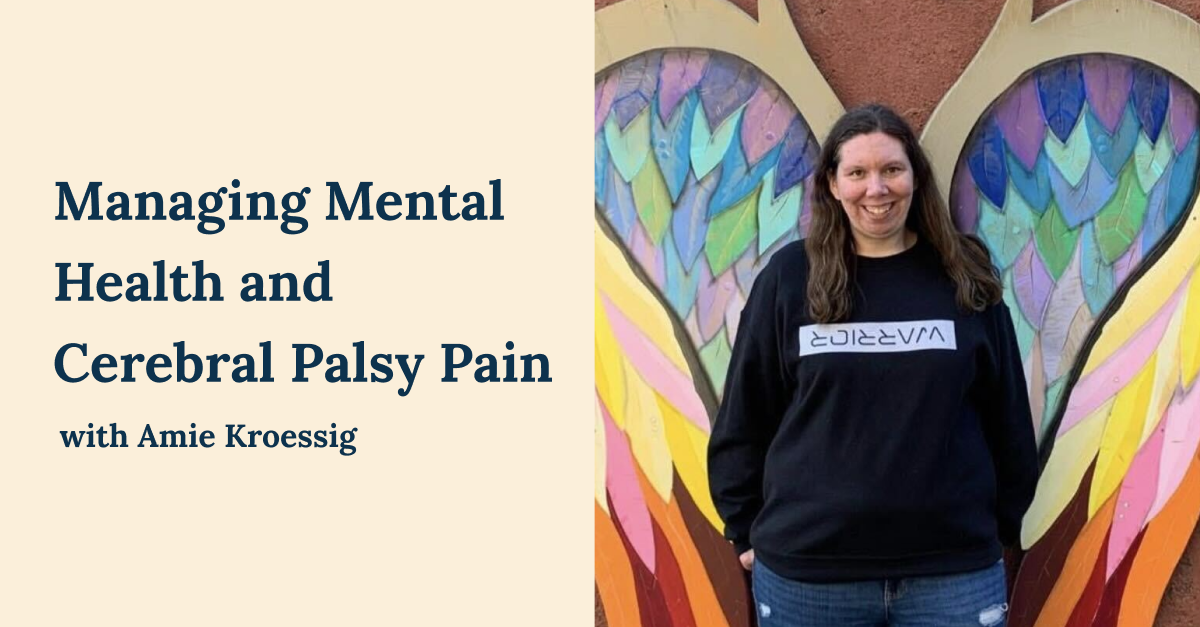
 Written by:Amie Kroessig
Amie Kroessig is a Patient Advocate and Outreach Coordinator for Cerebral Palsy Guide. In her role, she provides resources and support to families and caregivers of children with cerebral palsy to help give them the quality of life they deserve.