What Does a School Psychologist Do? A Q&A With Jamie Bay, Ed.S.
If you’re a parent of a child with cerebral palsy (CP) and they currently attend public school, it is important that you know what a school psychologist is and what their role is for your child within their school system.
The exact responsibilities of a school psychologist can vary by district, but generally, they complete psychoeducational evaluations to help determine your child's eligibility for special education services. These professionals play a critical role in determining your child’s needs within the school setting.
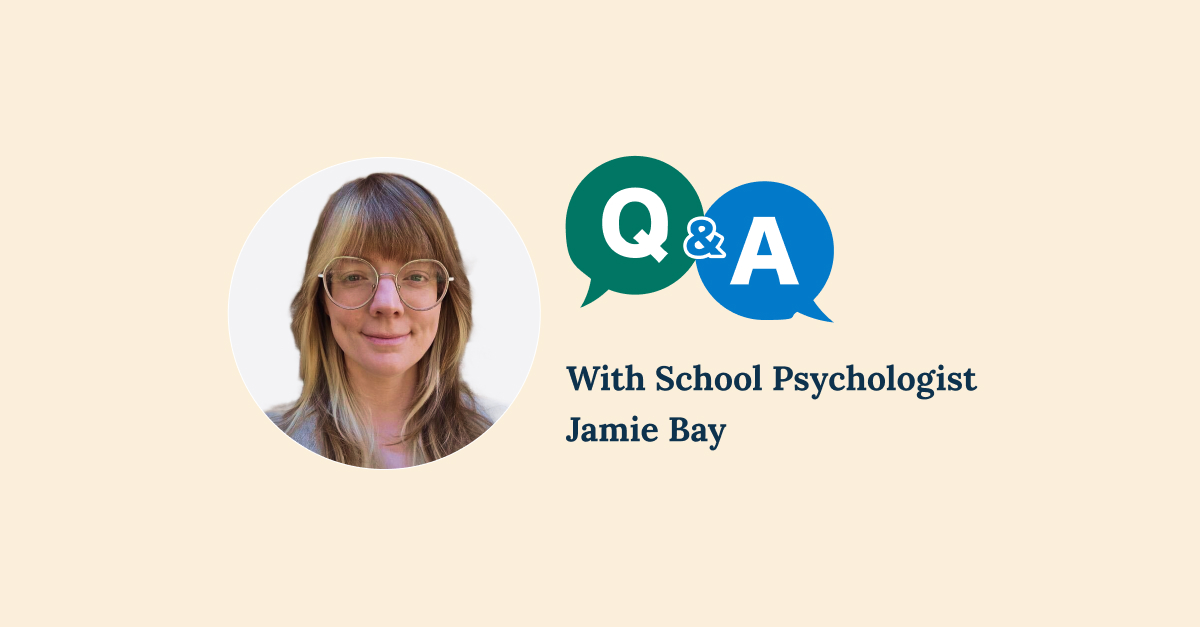
Jamie Bay, Ed.S., is a certified school psychologist with more than 5 years of experience in Florida public schools. She evaluates students for special education services and serves on the team that decides which supports a child qualifies for, including kids with CP.
Cerebral Palsy Guide spoke with Jamie about what her role looks like day to day, what parents often learn about school services that surprises them, and how families can work with their child’s school without feeling like they’re fighting it.

Q: What does a school psychologist do on a daily basis?
A: The specific responsibilities of a school psychologist can vary depending on your school district. However, most are directly involved in the evaluation referral process, completing the evaluation itself, and determining whether your child is eligible for special education services.
This can look like sitting in on problem-solving meetings with teachers and parents to provide consultation for interventions in academics and behavior, and communicating about the evaluation process and what to expect with parents.
It may also involve completing one-on-one evaluations with students that can include achievement, cognitive, and behavioral assessments, and assisting the school team (which should include the parent) with determining the specific needs of the student and whether special education services are appropriate for those needs.
Q: Who does a school psychologist work with?
A: School psychologists are typically considered school district employees, but they work very closely with their school teams. These school teams usually include school counselors, mental health counselors, behavior analysts, principals (and other administrators), teachers (both general education and special education), and professionals who help schedule and lead staffing and eligibility meetings.
Q: What training and certification does this job require?
A: The training and certification requirements to become a school psychologist can vary depending on what state you are located in. For the state of Florida, a school psychologist can be either certified through the Florida Department of Education or licensed through the Florida Department of Health.
To become certified through the Florida Department of Education, an individual would need to have a doctoral degree with a specialization in school psychology or a specialist-level degree (an equivalent of about 3 years of graduate-level study) from a program accredited or approved by the National Association of School Psychologists (NASP) or the American Psychological Association (APA).
Both paths require the individual to complete 1,200 hours of supervised internship. Individuals who do not complete these degree paths can also become certified, but they still must complete certain graduate-level school psychology courses and a 1,200-hour supervised internship.
These requirements are relatively similar across most states with some variations, but overall, school psychologists are highly educated professionals in their field who go through extensive programs and training to be effective in their positions.
Q: What is the role of a school psychologist in a special education evaluation?
A: This may also vary depending on your school district. In some districts, the school psychologist may be involved in interventions used in the general education classroom and in recommending a referral for a special education evaluation.
In other districts, the school psychologist may not be involved until the referral has been made. Once a referral for an evaluation has been made, the school psychologist is responsible for completing certain assessments relevant to the referral. This can include achievement, cognitive, and behavioral assessments or questionnaires.
Typically, the school psychologist will either explain during a meeting or over the phone what these evaluations will look like for your child. Certain pieces of an evaluation may be completed by other professionals depending on the evaluation type.
For example, a speech-language pathologist would be responsible for any and all language or articulation-based assessments.
Other professionals who may be included in your child’s evaluation include occupational therapists, physical therapists, behavior analysts, and others, depending on the concerns noted in your student’s referral.
Q: What is the role of a school psychologist in an IEP meeting?
A: A school psychologist’s role in an IEP meeting can vary depending on the district and the needs of the school-based team. Usually, a school psychologist primarily participates in IEP meetings to review completed psychoeducational evaluations, provide input on the student’s needs, and recommend potential services or accommodations that may help meet those needs.
Q: Why might a child with cerebral palsy need a school psychologist?
A: Children with cerebral palsy may demonstrate developmental delays in the areas of fine or gross motor skills, academic achievement, cognitive functioning, language or speech, and behavior/mental health. They may also have other medical conditions that may impact their ability to access their educational environment related to their cerebral palsy diagnosis.
As a result, many children with cerebral palsy require extra support within the school setting to be able to access their free and appropriate public education (FAPE). These supports are typically made available through special education services.
Therefore, a child with cerebral palsy may need a school psychologist to complete a psychoeducational evaluation to assist in determining that child’s needs and eligibility for special education services.
Q: How can a parent connect with the school psychologist?
A: Your child’s school should have the appropriate contact information for their assigned school psychologist and can provide it to you. It is important to keep in mind that many school psychologists across the country are assigned to multiple schools, so each school psychologist may have their own preferred and most effective way of contacting them.
If you want to contact the school psychologist to request an evaluation, I always recommend reaching out to your child’s school to see if they have any process for problem-solving or considering a referral for an evaluation for special education services first.
In many states, school-based teams prefer to get to know your child before considering a referral for an evaluation because many disabilities require varying levels of support, and multiple eligibility categories for special education require data collection.
This helps better determine the appropriate path to support your child. If the school does have a process for this, I encourage you to request to attend and actively participate in that problem-solving process. You may also request that a professional, such as a school psychologist, attend these problem-solving meetings to assist, if they do not already attend.
With that said, if you believe that your child with cerebral palsy has significant needs that may keep them from accessing their school environment to receive their free and appropriate public education, it is appropriate and within your rights to request an evaluation as soon as possible.
Q: What do you wish more parents of children with CP knew?
A: Many parents of students with disabilities, including cerebral palsy, are not aware of the importance or level of involvement of a school psychologist in the special education process for their children.
I want to make more parents aware of my role in their child’s education and what I can do to support them. I also want parents to be aware that many schools have their own problem-solving process that they should be actively involved in.
This helps create a collaborative relationship between parents and their child’s school and helps them better understand the district-level process.
For parents and caregivers of children with cerebral palsy, a school psychologist can be one of your greatest assets when navigating the special education referral, evaluation, and determination of services process. They are involved at every step and can help bridge the collaboration gap between you and your child’s school.
Understanding this role and being actively involved in the process will help you continue to be your child’s best advocate in their education.
Find Support for Your Child With Cerebral Palsy
At Cerebral Palsy Guide, we’re fortunate to work with professionals like Jamie Bay, Ed.S., who has spent more than 5 years inside Florida’s public schools evaluating students for special education services. Her experience helps parents understand a process that can feel confusing and overwhelming.
We thank Jamie for sharing her time and expertise, and we look forward to more of her guidance for CP families in the months ahead.
If your child has cerebral palsy, our registered nurses are here to listen. We understand the questions parents have about a child’s care, development, and the support that may be available.
Call us at (855) 220-1101 or Click to Live Chat to talk to a nurse today. Our team is here to listen and help you understand your next steps.
 Written by:Cerebral Palsy Guide
Cerebral Palsy Guide was founded upon the goal of educating families about cerebral palsy, raising awareness, and providing support for children, parents, and caregivers affected by the condition. Our easy-to-use website offers simple, straightforward information that provides families with medical and legal solutions. We are devoted to helping parents and children access the tools they need to live a life full of happiness