Growing Up With Cerebral Palsy: The Hardest and Best Parts
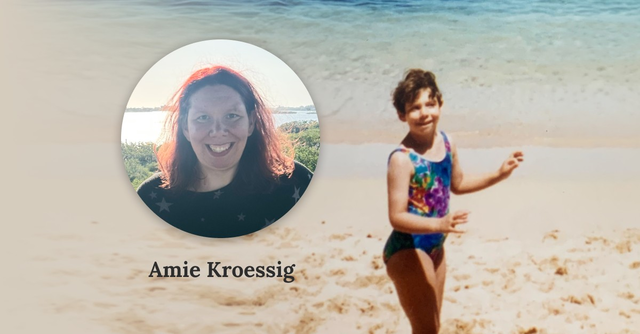
My name is Amie Kroessig, and I am one of the 1 million Americans living with cerebral palsy (CP), a group of neurological disorders that affects mobility and other skills. Growing up with cerebral palsy is not what any child or parent would ask for, but in life, you adapt.
I know firsthand that there are challenges of cerebral palsy that many people may not always see or understand. Despite the very difficult moments, I’ve also had some of the best times I never thought would happen. I want to share both.
What Cerebral Palsy Meant for Me as a Child
When people hear that their child is diagnosed with cerebral palsy, panic may set in as they think about how severe the condition might be and the challenges their child may face.
The good news is that CP is a static condition that doesn’t get worse over time. In my case, it was mild to begin with.
For me, cerebral palsy meant that my childhood looked different from that of my neighbors and friends. While they spent their time playing after school, I was often at some type of therapy appointment or specialized doctor visit.
It felt frustrating because I wanted to do the same things as everyone else without having to think about how my body moved.
At the same time, growing up this way taught me patience, determination, and empathy for others.
The Hardest Parts of Growing Up With Cerebral Palsy
One of the most difficult parts of growing up with cerebral palsy is dealing with physical challenges. Things may seem simple to others, but they can take more time, effort, and patience for someone like me.
Another difficult part is energy. Individuals with cerebral palsy use more energy than others to complete everyday tasks. Movements like walking, talking, or balancing can require extra effort because the muscles may be tight, weak, or not coordinated in the same way as someone without CP.
Because of this, people with cerebral palsy tend to become tired more quickly. Over time, this causes fatigue, especially after a day of work, school, or therapy.
- Unloading the dishwasher
- Doing laundry
- Driving from one place to another
There were also times growing up when I was bullied because I was different from other kids, and all I wanted was to fit in and be treated the same.
Not only that, it can be frustrating when people underestimate me because I have CP. Just because I have a disability does not mean I am not capable of achieving my goals and living a meaningful life.
Another challenge is having to advocate for myself. There have been many therapists and doctors in my life who either did not believe the symptoms I had or looked to my caregiver to confirm what I was saying instead of listening to me directly. It can be frustrating when your own voice is not the one that is trusted.
Best Parts of Living With Cerebral Palsy People May Not See
Even though there were hard parts, there were also parts of growing up with cerebral palsy that shaped me in a positive way. One of the biggest things it gave me was determination.
From a young age, I learned that if I wanted something, I might have to work a little harder or take a different path to get there. That mindset stayed with me as I navigated school, work, and everything else I’ve done.
Growing up with cerebral palsy, I learned how to speak up. And not be afraid to take up space over time. That hasn’t always been easy, but it has helped me grow more confident in who I am.
Another important part of my experience has been learning how to adapt. Whether it was finding different ways to complete tasks, keeping up with others, or trying something new, I learned early on that there is always more than one way to do something.
Because of this, I’ve been able to do things I never thought would be possible for me, like playing soccer, working in different fields, and building a life that I’m proud of.
Cerebral palsy is part of my life, but it is not everything. It has shaped who I am, but it has also shown me what I am capable of.
What I Wish People Understood About Cerebral Palsy
One thing I wish more people understood is that cerebral palsy can look very different from one person to another. Not everyone with CP uses a wheelchair or has the same level of challenges.
Just because something isn’t visible doesn’t mean it isn’t there. There are days when things take more effort, even if it doesn’t show on the outside.
I also wish people understood that living with cerebral palsy does not mean someone is not capable. I have had to do things differently at times, but I am still able to set goals and work hard to achieve them.
At the end of the day, I think people with CP want the same things as anyone else — to be understood, to be included, and to be given a chance.
My Message for Parents of Children With Cerebral Palsy
If you are a parent of a child with cerebral palsy, I understand how overwhelming it can feel at first. There will be challenges, and there may be moments where you are unsure of what comes next. But there will also be progress, growth, and moments you didn’t expect.
Your child is capable of more than you may realize right now. With the right support, encouragement, and patience, they can build confidence and find their own path.
One of the most important things you can do is believe in them and listen to their voice as they grow.
If you have questions or need support, you can call us at (855) 220-1101 to see how our team may be able to help.
 Written by:Amie Kroessig
Amie Kroessig is a Patient Advocate and Outreach Coordinator for Cerebral Palsy Guide. In her role, she provides resources and support to families and caregivers of children with cerebral palsy to help give them the quality of life they deserve.