Everyday Accessibility Tips From a Mom With Cerebral Palsy
Accessibility isn't black and white. And neither is parenting with a disability.
Before becoming a mom, if you had asked me what came to mind when I thought about accessibility, I probably would have listed the obvious things: ramps, elevators, and those coveted handicapped parking spaces.
Now, as a mother of two with cerebral palsy (CP), I know accessibility extends far beyond the typical tools and resources.
Accessibility as a disabled parent looks different than you may expect. It's less about maneuvering shopping aisles and parking lots (though those challenges are still very real) and more about finding safe and practical ways to care for my children and myself.
For me, accessibility begins at home, long before I leave the house — or even get out of bed in the morning.
I won't pretend to have all the answers. I'm still figuring this whole disabled-parent thing out myself. But through trial and error, plenty of tears, and the support of people who love me, I've slowly started to find my way through the wilderness.
Permission to Parent Differently
That journey began when I decided it was okay if my motherhood didn't look like everyone else's — or even how I had once imagined it would.
I gave myself permission to need help — to admit that being a parent with cerebral palsy caring for two young children might require a different approach than I had originally imagined.
So, instead of fumbling out of bed every morning, stiff and sore with a crying baby on my hip, I swallowed my pride — and my innate need to prove my motherhood to myself and others — and started keeping an umbrella stroller beside my bed.
This small change seemed simple, but it completely changed my mornings and the way I thought about accessibility as a mom with CP.
Now, I have my hands free to wrangle my older daughter out of bed while my youngest kicks happily in her stroller seat, drinking from her sippy cup. The handfuls of toys I once insisted on carrying can now be tucked into the storage basket beneath the stroller. And my own belongings go neatly in the top basket, too.
For once, I don't have to choose between carrying what my daughters need and bringing along the things I need to care for myself.
Choosing Us Both
Like many parents with cerebral palsy, I only have so much energy, and I tire quickly. For a long time, whenever I had to choose between what I needed and what my daughters needed, they always came first.
Yet through the ups and downs of disabled parenting, I'm learning that accessibility isn't just something I practice for my daughters — it's something I have to practice for myself, too. I have to choose us both.
Not because my needs matter more than theirs, but because meeting my own needs allows me to show up more fully for them. I just have to be intentional about how I balance all of our needs.
Preparation Is My Best Accessibility Tool
So what does accessibility actually look like in my everyday life? I'm still learning. But one thing that has made a world of difference for me has been preparation.
And it begins every night before my head hits the pillow — with the help and support of my sweet husband.
- The umbrella stroller? I always know exactly where it is. It has become a constant companion around our house.
- Tiny shoes wait by the door, beside a packed, ready-to-go diaper bag.
- Their favorite toys sleep in an easy-to-reach spot in the toy bin — or, depending on the day, sometimes even on the floor.
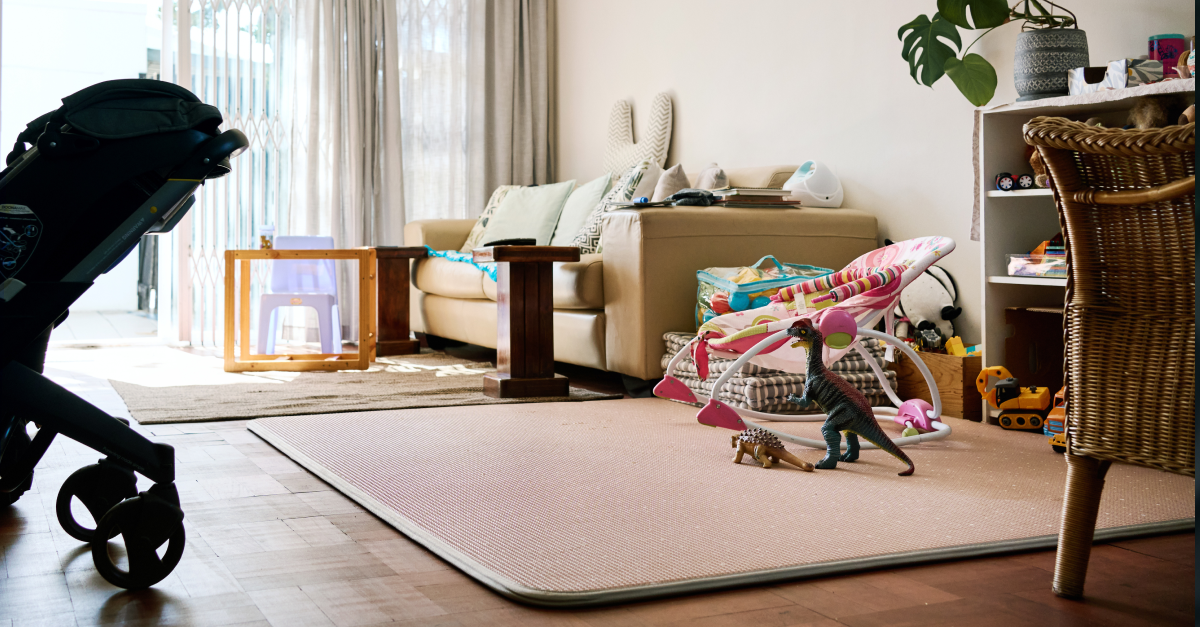
Other essentials are never far out of reach, either. Diapers, wipes, and extra clothes sit in a basket next to the sofa. Snacks, sippy cups, and a very cold cup of coffee for Mom sit on a coaster beside my usual spot.
While the girls play in our tornado of a living room, I gather what I need to keep our day running smoothly.
Cleaning, organizing, and all the other house things happen in spurts throughout the day. My main focus is conserving my energy so I can stay present with my girls.
That isn't always easy when I'm constantly preparing for the next thing. To someone else, these things might simply look like good organization. To me, they're accessibility.
They're the quiet accommodations that allow me to parent safely, confidently, and with less physical strain. They're the difference between spending my mornings recovering from unnecessary exhaustion and spending them chasing giggles through the living room.
The Biggest Lesson Accessibility Has Taught Me
I've learned that accessibility isn't about finding shortcuts. It's about removing barriers that never needed to be there in the first place.
For a long time, I thought asking for help or adapting the way I parented somehow meant I was falling short. Now I see it differently.
Every adaptation, every system, and every bit of preparation behind the scenes allows me to spend less time proving what I'm capable of and more time doing what matters most: being present with my daughters.
Maybe that's the biggest lesson accessibility has taught me. It doesn't make me less of a mother. It helps me be the kind of mother I've always wanted to be.
My girls probably won't remember the umbrella stroller beside my bed or the carefully stocked diaper basket in the living room. What I hope they'll remember is a mom who was present.
If accessibility helps me spend less time fighting unnecessary barriers and more time simply being their mom, I'd say it's doing exactly what it was meant to do.
 Written by:Leeanne Williams
Leeanne Williams is a guest contributor for Cerebral Palsy Guide and an integral voice behind our living with CP series. As a writer, wife, and mom of two living with cerebral palsy, Leeanne shares honest stories about motherhood, family life, and community. Her work creates space for connection and real conversations about the impact of cerebral palsy.