Understanding the different types of birth injuries
The different types of birth injuries are medical conditions that affect a baby around the time they are born. These diagnoses often appear in medical records, discharge paperwork, or early follow-up visits.
Some birth injuries heal with time and treatment. Others can lead to permanent challenges or lifelong care needs.
Understanding what each type means can help make sense of what you were told, what care may be needed now, and how it could affect your child’s future. Cerebral Palsy Guide has a team of labor and delivery nurses on staff who can answer your questions.

"I talk with families from all over the country whose babies were injured during birth. Sometimes parents just need someone to hear what happened. I’m here to listen and help them figure out next steps."
— Kristin Proctor, RNC-OB, Cerebral Palsy Guide on-staff registered nurse
If you're concerned that your child might have a birth injury, we’re ready to discuss your situation and help sort through what you’re dealing with.
Connect with one of our registered nurses now — it’s always free to talk with our team.


Birth injury types and early warning signs
Some types of birth injuries are identified right away, while others become clearer in the hours, days, or weeks after birth. Parents often notice concerns first, especially after a difficult delivery, a NICU stay, or treatments like cooling therapy.
Early symptoms that can be linked to different types of birth injuries include:
- Abnormal appearance: Unusual coloring, swelling, or bruising
- Breathing problems: Fast, labored, or irregular breathing
- Difficult to wake up: Lethargic and hard to wake or keep awake during feeds or easily irritable, making feeding more difficult
- Feeding difficulties: Trouble nursing, sucking, or swallowing
- Limited or uneven movement: Weakness or reduced movement on one side of the body
- Persistent crying: High-pitched or inconsolable crying
- Missed milestones: Developmental delays that become more noticeable over time
If something about your child’s birth isn’t sitting right, the Cerebral Palsy Guide team can help you talk through what happened and what it may mean.
Watch our short video to learn how our caring team of nurses and patient advocates can support your family.
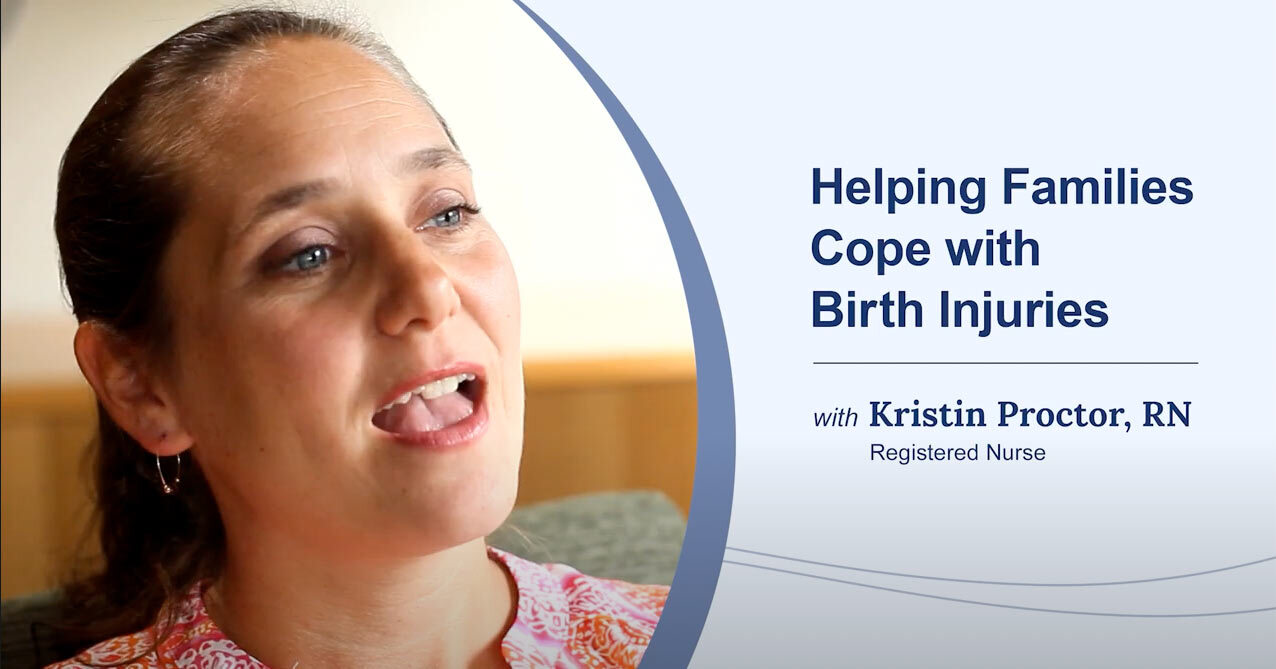
One of our nurses, Kristin Proctor, explains how she supports, educates, and advocates for our birth injury clients.
Duration: 1 min 56 sec
I think my work helps people because sometimes a mother who's been through these traumatic situations just needs somebody to listen to them and to hear their story and to validate their feelings. And I have the opportunity to do that. Even if we can't help them with a claim, we do have the opportunity to hear them out and validate their feelings. One of the first big claims I ever helped with was a little boy who was full term and the parents were expecting a healthy baby. Everything had gone smoothly. Then the labor and delivery was very complicated and there were some issues with the baby being in distress and an untimely delivery. It took a little bit too long for the doctors to make the decision and for the baby to be delivered. And unfortunately, the child suffered from cerebral palsy with lifelong complications.
The family needed a whole new home and lots of modifications to their lifestyle to adapt for this child. And speaking to the mother, it was very touching. It was life changing hearing her story and what she had to go through and how now the rest of this child's life will be complicated by cerebral palsy. We were able to help that family with a significant settlement. I believe it was around four or five million dollars to help them restructure their home and provide the therapies that this child would need for the rest of his life. We also provide clients with resources. We have a cerebral palsy guide, which can help different parents who have children, or if you have a grandchild or a family member, a friend who might have cerebral palsy, we do have a guide that can help provide some resources. We also would be happy to speak with anybody about the situation that they're going through and the injuries their child has gone through.
What are the most common types of birth injuries?
There are several types of birth injuries. They’re often grouped by what part of a baby’s body was affected and how the injury happened.
- Brain and oxygen-related injuries
- Nerve damage and spinal injuries
- Head and skull injuries
- Birth emergencies and assisted-delivery injuries
- Other birth injury types
Learn more about the different types of birth injuries below.
Injuries in this group affect a baby’s brain when oxygen, blood flow, or pressure problems occur around the time of birth. These conditions can impact movement, learning, and long-term development.
- Brain bleeds (intraventricular and intracranial hemorrhages)
- Brain damage
- Cerebral palsy (CP)
- Hydrocephalus
- Hypoxic-ischemic encephalopathy (HIE)
- Periventricular leukomalacia (PVL)
These injuries affect the nerves and spinal cord that control movement and sensation. They often happen during difficult deliveries and may lead to weakness, paralysis, or limited movement in certain areas of the body.
- Brachial plexus injury
- Erb’s palsy
- Facial paralysis
- Spinal cord injuries
These injuries involve a baby’s head, scalp, or skull and may result from pressure during delivery or the use of delivery tools. Some heal on their own, while others need monitoring or treatment.
- Cephalohematoma (skull bleeding)
- Facial lacerations
- Skull fracture
These injuries are linked to urgent delivery situations or the use of assistive tools. When complications happen quickly, babies can face physical harm or oxygen deprivation.
- Forceps delivery complications
- Shoulder dystocia (baby’s shoulder lodges in birth canal)
- Vacuum extractor complications
This group includes serious newborn conditions that can develop during or soon after birth and may lead to long-term health concerns.
What causes a birth injury?
The different birth injuries can result from many factors during the labor and delivery process. Common causes of birth injuries include unavoidable fetal and maternal health issues, as well as congenital birth defects.
While many birth injuries can’t be prevented, medical negligence may be responsible for some cases. Medical malpractice occurs when obstetricians, doctors, and other medical professionals fail to uphold the standard of care during pregnancy and childbirth.
These medical mistakes can lead to several types of birth injuries:
- Assisted delivery tool misuse: Improper use of forceps or vacuum extraction during delivery
- C-section delays: Failing to perform a timely cesarean section when necessary
- Failure to detect and treat fetal distress: Not recognizing and treating dangerous heart rate changes or a lack of oxygen
- Medication errors: Prescribing incorrect medications or doses during labor or delivery
- Neglecting complications: Failing to address concerning signs pointing to issues with the placenta or umbilical cord, such as a prolapse (umbilical cord falling below baby) or abruption (early separation of the placenta from the uterus)
- Poor prenatal care: Inadequate management of maternal and fetal health before delivery
If your child was harmed at birth, you may be able to take legal action to seek the money you need to provide a secure future for your family.
Cerebral Palsy Guide partners with top birth injury attorneys. As of 2026, they‘ve recovered over $1.1 billion and can help families in all 50 states.
Find out if we can help you right now with a free legal case review.
How do you treat each type of birth injuries?
Treatment depends on the type of birth injury and how it affects a child over time. Some babies need short-term care, while others may require ongoing support as they grow. The goal is to help children reach their fullest potential and manage challenges as early as possible.
Treatment options for different types of birth injuries may include:
- Braces or orthotics: To support movement and positioning
- Medications: To manage symptoms like pain, stiffness, or seizures
- Physical therapy: To build strength, balance, and mobility
- Speech therapy: To support communication and feeding skills
- Surgery: To repair nerve damage, fractures, or other injuries
A child’s care plan often changes over time as needs become clearer. Many families also look for guidance on long-term care, resources, and financial support when a serious birth injury is involved.
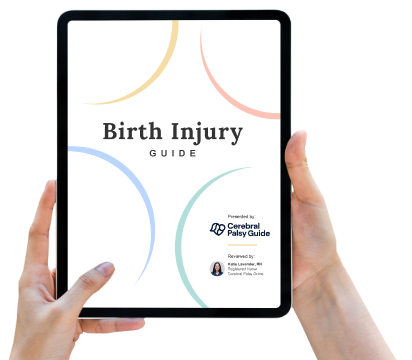
You can download our FREE Birth Injury Guide to learn about treatment options, financial resources, and support services.
Get legal help for a birth injury
Unfortunately, many types of birth injuries are the result of negligence during childbirth. These avoidable injuries can result in permanent damage and have a lasting impact on a child's life.
With help from experienced legal professionals, some families learn that a medical mistake contributed to their child’s birth injury and seek compensation to help cover long-term care costs.
Working with an experienced birth injury attorney can help families get the financial support they need to provide the best possible future for their child.
If you suspect your child's birth injury was due to health care negligence, we may be able to help you take action. Our trusted network of birth injury law firms has secured over $1.1 billion.
Reach out to Cerebral Palsy Guide at (855) 220-1101 right now or fill out this form for a free case review.